Ten things multi-day endurance taught me about work
Weeks on a tandem and long days on trails taught me ten habits I now bring to every project. What each one looks like on the road and at work, and what the research does and doesn't say.
- Written by
- Naresh Kumar
- Published
- Reading time
- 6 min
- Topic
- Endurance
Some employers say they like hiring endurance athletes. The idea is that someone who has trained for months, and kept going on day nine of a long ride, brings the same habits to work.
I’m biased. I’ve spent a lot of my life on long roads: ultramarathons, the Silk Road Mountain Race, and more than 17,000 km on a tandem bicycle across 15 countries for Freedom Seat. So before writing this, I read what the research actually says. Then I wrote down the ten habits I recognise in myself, and where each one shows up in my work.
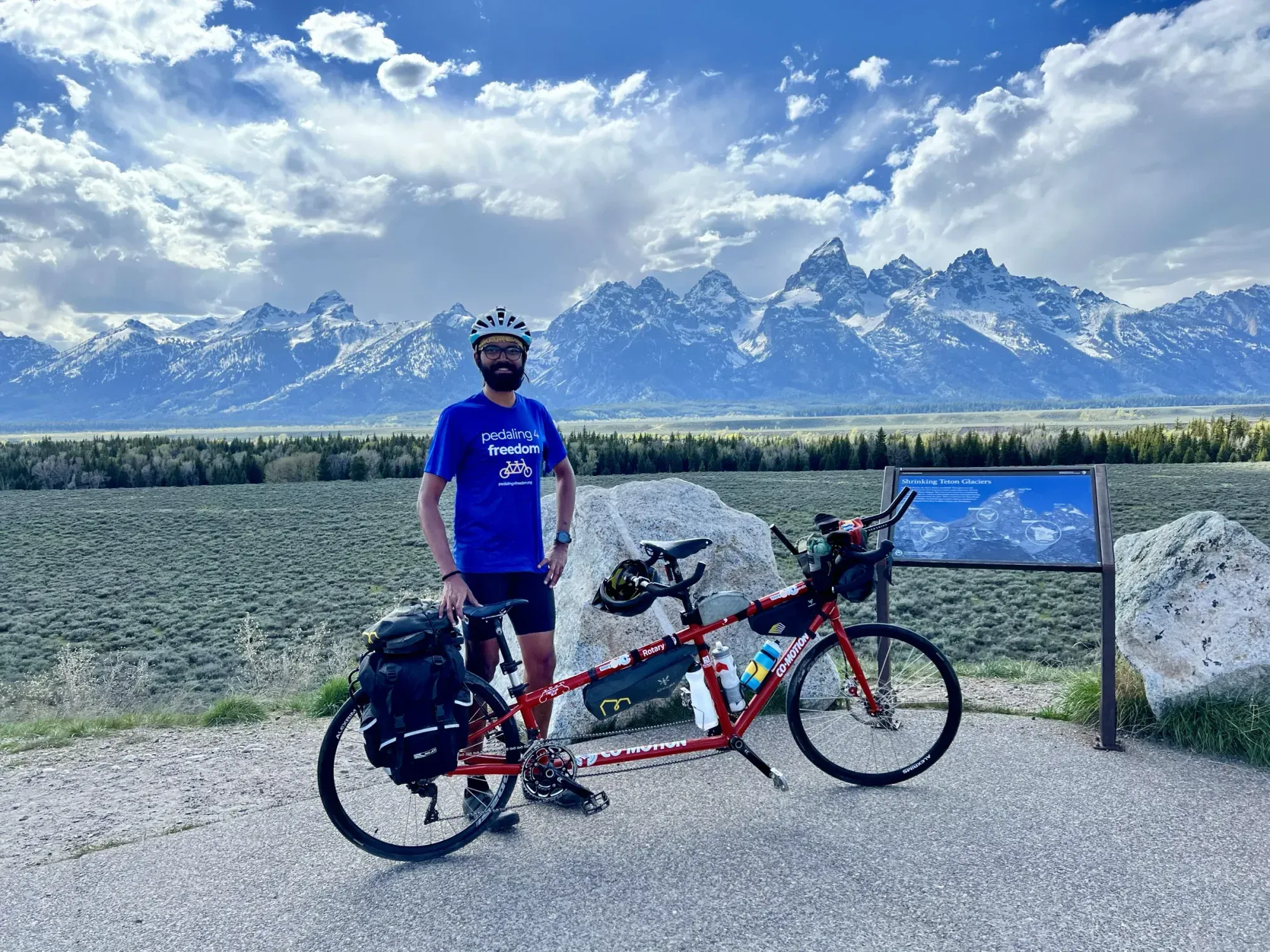
Teton Range, USA, 2024.
What the research says, and doesn’t
The enthusiasm is easy to find. Christina Tosi, who built Milk Bar, has said she likes hiring long-distance runners for their long-term commitment and their comfort with discomfort. Luke Davies wrote about hiring endurance athletes for sales because they prepare, stay consistent and finish. These are thoughtful opinions, but they are opinions.
The stronger evidence is narrower. A 2024 review of 44 studies found that physical-challenge programmes do build personal, social and thinking skills. But the authors couldn’t establish whether those gains carry over into the workplace, and the programmes went well beyond endurance sport. Research on youth sport adds that the environment, the people and deliberate support matter a great deal in whether these lessons stick.
So here is my honest position. Endurance doesn’t make anyone a better hire by default. It gave me a lot of practice at a few habits, and the useful question is whether those habits show up in the work. That’s what the rest of this post tries to show.
1. Prepare for what goes wrong
On the road. On the 2019 ride from Chennai to Hamburg, going through Pakistan turned out to be difficult: visas were hard to get, and I wouldn’t have been able to ride the whole way past Quetta. Once I realised that, I secured an Iran visa at the Iranian embassy in Mumbai, rerouted through Oman, and later crossed Iran with no working phone and no working bank card. The destination never changed; the plan had to.
At work. I spent years in software testing, where the job is to imagine what breaks before it breaks. I still plan that way: what’s the failure mode, what’s the fallback, and who needs to know early.
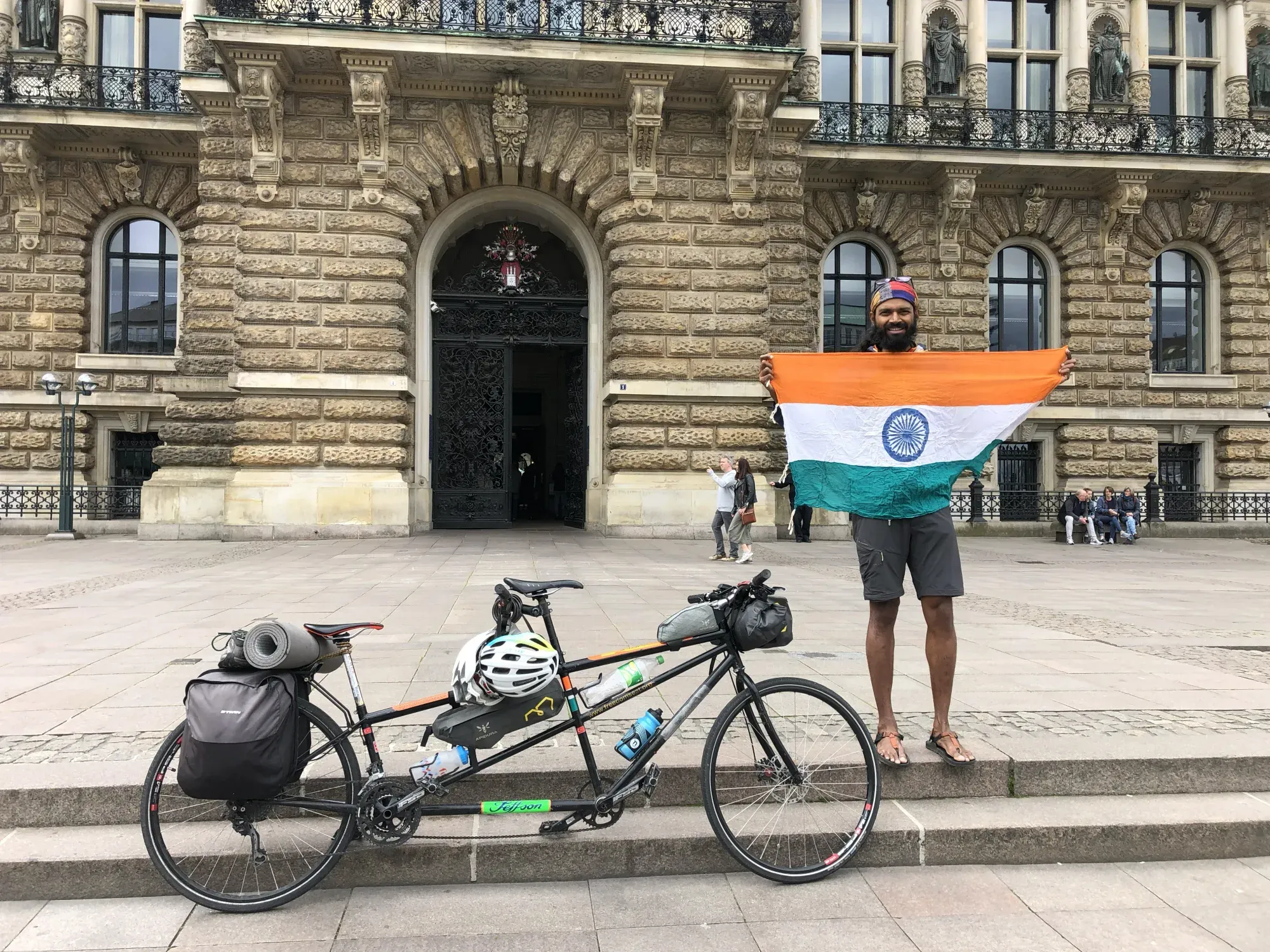
Chennai to Hamburg, 2019.
2. Pace yourself
On the road. Start a multi-day ride too fast and the later days make you pay for it. The real skill is choosing an effort you can repeat tomorrow.
At work. At VMware I directed testing and release for four global releases, coordinating about 30 people. All four shipped on time, not through heroics but through a pace the team could hold. Today I build in small, reviewed steps for the same reason.
3. Show up every day
On the road. On an expedition, motivation comes and goes. The bike still needs riding every morning, and the distance only adds up because you do the ordinary thing again.
At work. GVRAT has run every year since 2020. I’ve run the platform behind Big’s Backyard Ultra since 2020, and Bedrock Sandals has trusted me with its security and infrastructure since 2012, and made me its fractional CTO in 2026. Most of that is unglamorous, consistent work, and it’s the part clients value most.
4. Keep going when it’s hard
On the road. There were days I wanted nothing more than a reason to quit. I kept riding.
At work. In 2020, during lockdown in India, I built the system for a virtual race in under a week. It wasn’t comfortable, but the race directors needed it, and thousands of runners were waiting.
5. Use what you have
On the road. At the Silk Road Mountain Race in Kyrgyzstan, a torn tyre left me far from the nearest town. I patched it with my sailcloth wallet and rode about a hundred miles through the Tian Shan to the finish.
At work. That virtual race was planned for 2,000 runners. More than 19,600 signed up. We kept entries open and built for the people who came, with the tools and time we had.
6. Mind the small things
On the road. Over a long distance, small choices add up: a loose bolt, a skipped meal, a missed turn. Checks become routine because the cost of skipping them shows up later.
At work. My career began in technical support at Dell, helping people without a technical background troubleshoot servers. Getting the diagnosis right meant listening carefully to small details. Today that shows up as regression tests, careful handovers and checking every claim before it’s published.
7. Own your decisions
On the road. Preparation makes your choices visible. If you under-packed or misjudged a climb, there’s no one else to blame, and the only useful move is the next good decision.
At work. Nothing ships without my sign-off, and every sentence on my website was checked against my own notes. When GVRAT and CRAW runners had questions about logging miles, I answered them myself.
8. Stay calm when it breaks
On the road. Flat tyres, snapped chains, a crank that fell off, a flash flood. Each time, panicking wasn’t an option. Assess, fix what you can, keep moving.
At work. An AI agent I work with once pushed an unreviewed commit to the branch that runs my live site. We stopped, worked out exactly what had happened, and fixed it carefully rather than quickly. I wrote about it in One step at a time.
9. Let feedback steer
On the road. A long ride gives you honest feedback: your legs, your kit and your plan all tell you what’s working. Ignoring it is how small problems become big ones.
At work. When I turned The Pragmatic Programmer into a skill for AI coding agents, I didn’t assume it worked. I tested agents with and without it and published the results. Here’s what happened.
10. Go further together
On the road. Freedom Seat is built on an empty seat. More than 500 people have climbed on and pedalled with me, many of them strangers I met that day, and some became lifelong friends.
At work. My best work has come from long relationships: race directors whose races I ran, a sandal company whose sandals I raced in, people I met on trails. I’d rather build something with you than for you.
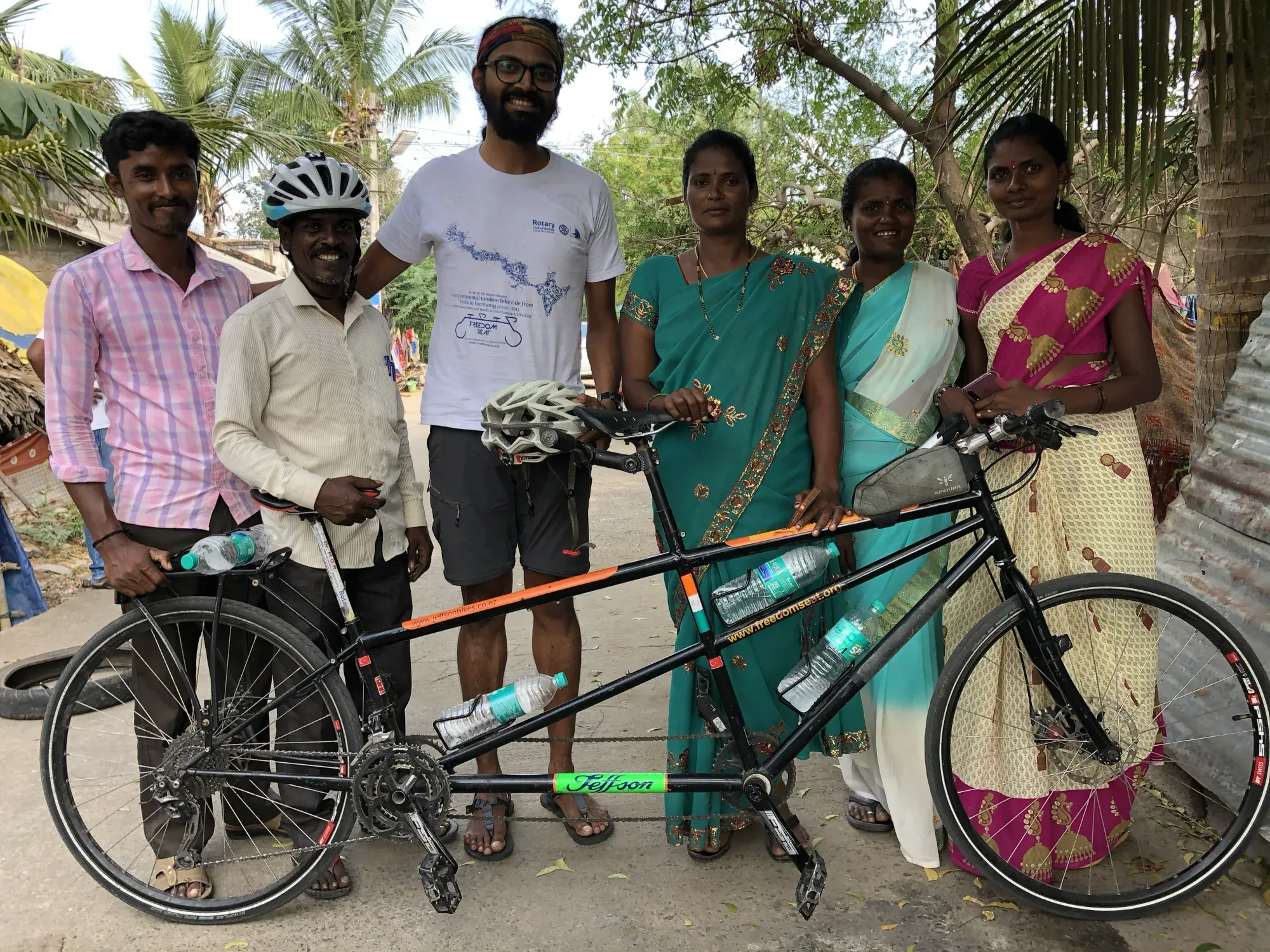
Supporters gathered around the tandem.
The finish line
None of this is unique to athletes. Plenty of people learn the same habits raising children, running a farm or nursing a patient through a long night. Endurance is simply where I practised mine.
If you’re deciding whether to work with me, don’t take the miles as proof. Look at the work, and ask the people I’ve worked with. The miles just explain how I got this way.
Sources
- Christina Tosi, interviewed on Post Run High (September 2025). Listen
- Luke Davies, “Why I Like To Hire Endurance Athletes For Sales Roles”, LinkedIn, 2015. Read
- Tyne and colleagues, “Physical Challenge Interventions and the Development of Transferable Skills for the Workplace: A Systematic Review and Meta-Analysis”, Organizational Psychology Review, 2024. doi.org/10.1177/20413866241245301
- Holt and colleagues, “A grounded theory of positive youth development through sport”, International Review of Sport and Exercise Psychology, 2017. doi.org/10.1080/1750984X.2016.1180704